
Every year, the last stretch of the calendar hits fleets three ways at once. Holiday freight fills every schedule. Loaded trailers sit longer while facilities close for the holidays, and cargo thieves know it. And the first ice storm finds every low tire and ABS fault you didn't catch in October.
The fleets that come out ahead don't work harder in December. They prepare in November. Here's how to get your trailers ready for the season ahead.
1. Make every trailer count during peak
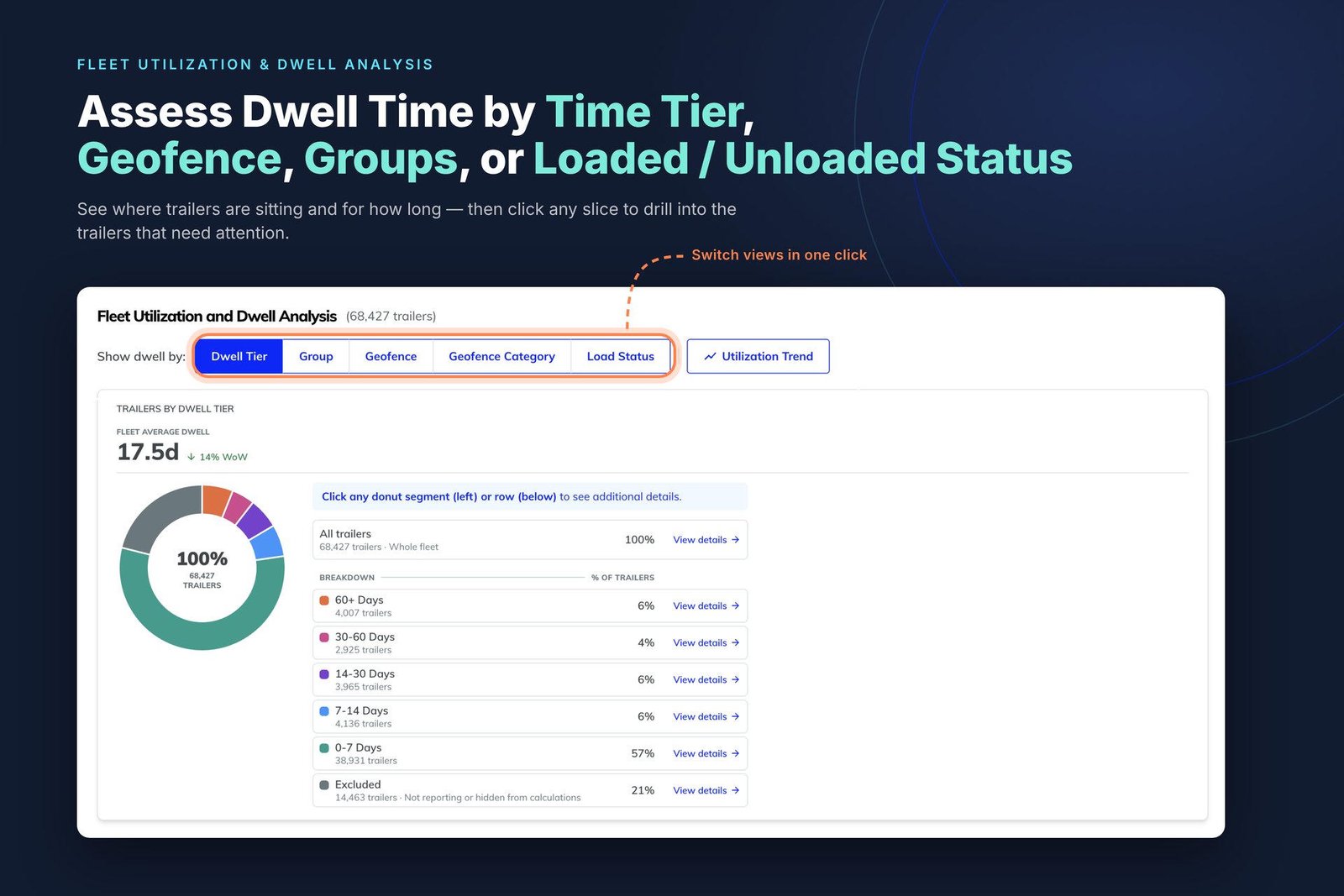
When holiday volume climbs, the first instinct is to rent or lease more trailers. But most fleets already own more capacity than they can see. Trailers get dropped at shipper yards, parked at drop lots and left at DCs, and nobody notices until a load needs one.
Before you add equipment, find the trailers that are just sitting:
- Utilization by trailer and location. See which trailers moved last week and which didn't, by yard, customer or trailer group.
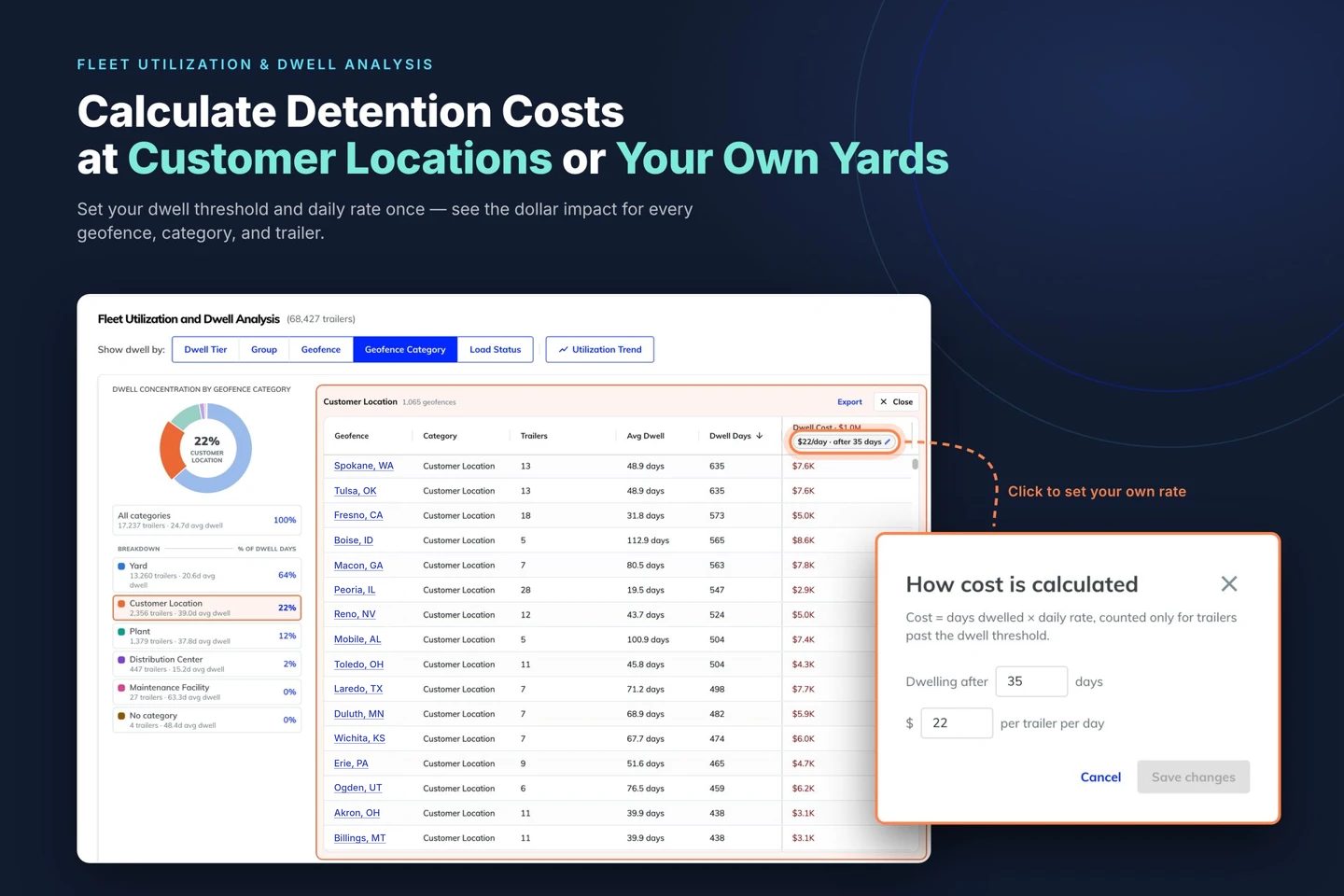
- Dwell at every stop. Holiday receiving hours are shorter and dock lines are longer. Know which sites hold your trailers the longest so dispatch can plan around them.
- Detention you can prove. When a trailer sits past free time, time-stamped arrival and departure data backs up the charge.
Fleets using FleetPulse see trailer utilization up 17%. That's capacity you can put to work this season without signing another lease.
2. Protect loads from holiday cargo theft
Cargo thieves don't take holidays off. Cargo theft losses rose 60% in 2025, to nearly $725 million, and the average theft was worth $273,990, according to Verisk CargoNet. Food and beverage was the most stolen commodity, with 708 thefts, up 47% from the year before.
The holidays make it worse. Facilities close, loaded trailers sit longer, and fewer people are watching the yard. Over Thanksgiving 2024, food and beverage loads made up 31 of the 79 thefts CargoNet recorded, more than any other category.
You can't post a guard at every drop lot, but you can know the moment something changes:
- After-hours alerts. Set the hours and places a trailer should stay put. If a door opens, cargo is removed or a trailer moves outside them, your team gets a text right away.
- Location you can act on. If a trailer goes missing, its last known location and recent movement history are ready in seconds, so you can hand police a lead instead of a guess.
- Less time sitting loaded. Cutting dwell on loaded equipment shrinks the window thieves count on.
3. Get trailers and tires winter-ready
A breakdown on a snowy shoulder costs more than the repair. It's a road call, a late load, a driver waiting in the cold and a safety risk for everyone on the highway.
Cold weather starts with the tires. Tires can lose 2–3 PSI for every 10°F drop in temperature, according to Fleet Equipment. Underinflated tires wear faster, burn more fuel and fail more often, and a cold snap can push a whole fleet below spec overnight.
Before the first storm, check the four things that most often put trailers on the shoulder in winter:
- Tire pressure on every trailer, not just the ones in the yard.
- The tire inflation system, so a slow leak gets fixed instead of masked.
- ABS faults, which matter most on icy roads.
- Lights, before shorter days and roadside inspections find them first.
FleetPulse monitors all four across your fleet and flags faults as they happen, so your shop can fix them on your schedule instead of on the shoulder.
Get ready with a fleet specialist
We'll walk through your fleet's trailer data with you and show where you can find capacity, protect loads and catch winter faults early.
Schedule a demo with a fleet specialist
Sources
- Verisk CargoNet: Cargo theft losses surge to estimated $725 million in 2025 (Jan 22, 2026)
- Verisk CargoNet: Cargo theft risks spike during Thanksgiving holiday (Nov 25, 2025)
- Fleet Equipment: Fighting cold weather tire PSI loss
- FleetPulse solutions page, fleetpulse.com: trailer utilization up 17%